
The AIAP and 100E Experience
You know the AIAP origin story and what we look for in an apprentice. Here is the AIAP programme itself, and how AIAP and 100E fit together.
How AIAP works
The AIAP starts with 2 months of deep skilling, followed by a 7-month project phase. The majority of apprentices work on 100E projects. Some work on internal projects, such as developing AI products like Synergos, our federated learning framework, or MLOps tooling and LLM products in the AI Products team. That integration of AIAP and 100E is the point of the programme.
The deep skilling phase (2 months)
The 2 months are intensive and often a shock to many apprentices. Most will have self-taught their AI/ML algorithms, and very few will have learnt about docker containers, Git, good coding practice and software engineering in general before joining AIAP.
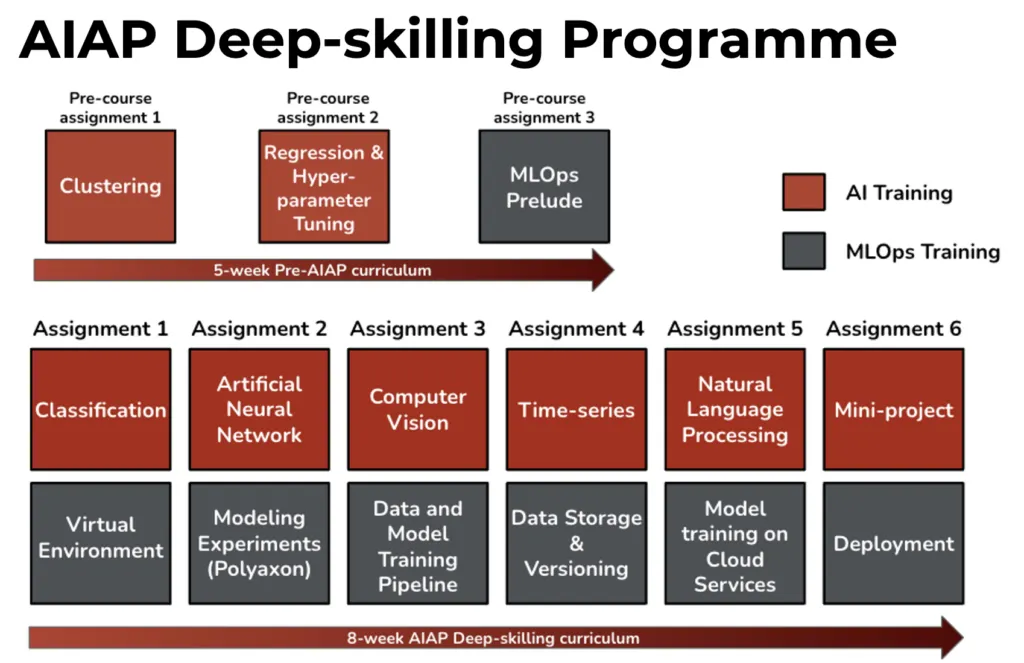
The curriculum covers machine learning fundamentals, advanced ML/deep learning, and MLOps focused on deploying an AI model. There are no classrooms or lectures in these 2 months. The phase runs on self-directed learning assignments and discussions with mentors. The curriculum is dynamic, and the AIAP AI Mentors will introduce new techniques and research papers as required.
Part 1 - Machine Learning Fundamentals
- Data acquisition and cleaning
- Exploratory data analysis
- Feature engineering
- Clustering models
- Dimensionality reduction techniques

Part 2 - Advanced Machine Learning and Deep Learning
- Fundamentals of neural networks
- Computer vision methods (CNNs, image preprocessing, etc)
- Natural language processing methods (word embeddings, LLMs, etc)

Part 3 - Deployment
- Containerisation with Docker
- Testing and documentation
- Model deployment (web apps, APIs, etc)
Apprentices get exposure to theory and hands-on practice across the ML workflow, from data to training to deployment. That is the solid foundation for the real-world AI projects that follow.
The project phase (7 months)
Most apprentices work on real-world industry projects via the 100 Experiments (100E), helping companies solve business problems using AI, building minimum viable products, deploying AI models into production and getting experience working with stakeholders.
100E project sponsor companies need to co-invest at least $75,000 cash and $126,000 in-kind. So the industry projects in the 100E programme are real-world business problems the company really wants to solve, not a toy project the company is doing as “national service by providing internship projects for university interns”.
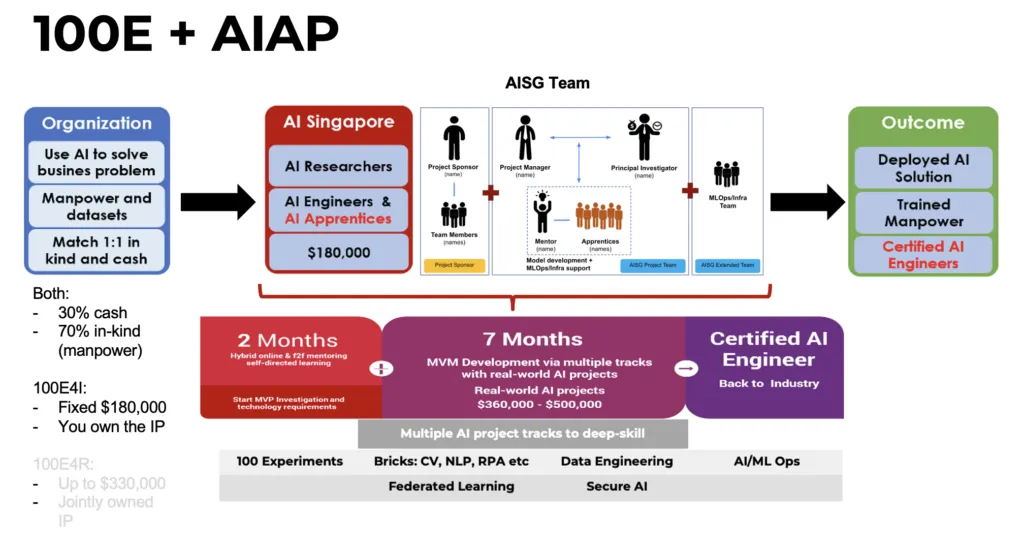
The AIAP project team consists of 1 full-time AI engineer as the mentor, 4-6 apprentices working full-time, and a professional project manager overseeing 3-4 projects, with support from senior AI engineers and MLOps experts. Unlike an internship model where trainees work alone at a sponsor’s office, the AIAP team works collaboratively at AI Singapore’s office. The project manager coordinates across teams, works with the various stakeholders and handles administrative project tasks. The mentor provides hands-on guidance and technical expertise, and senior AI engineers and MLOps staff lend additional support.
The full-time team works through all project stages together, from initial research to data processing, model development, MLOps implementation, deployment and documentation, with daily interactions and agile sprints. Apprentices get ongoing supervision rather than working independently. That close, guided teamwork is what facilitates deep learning and accelerates skills development for real-world AI engineering.
After executing and delivering more than 70 projects, here is a typical 7-months project cycle.
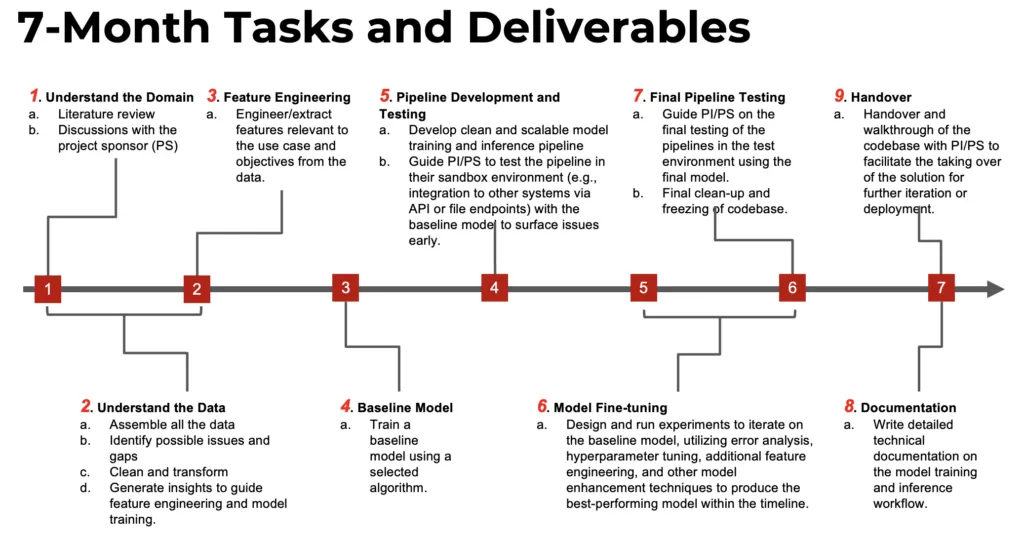
A typical student internship offers limited partners and part-time effort. The full-time AIAP team can fully immerse in the project. The AI mentor and apprentices work standard office hours, Monday through Friday, collaborate intensely and use production-grade frameworks to deliver the project.
With 4-6 dedicated apprentices guided by an experienced mentor, the team takes on substantial real-world projects, with the time and support to follow proven industry methods rather than cutting corners to meet tight deadlines. It develops solutions to the same standards used at tech companies and AI startups. This focus on quality and engineering rigour accelerates the apprentices’ readiness for the industry. Some of the tools used are shown below:
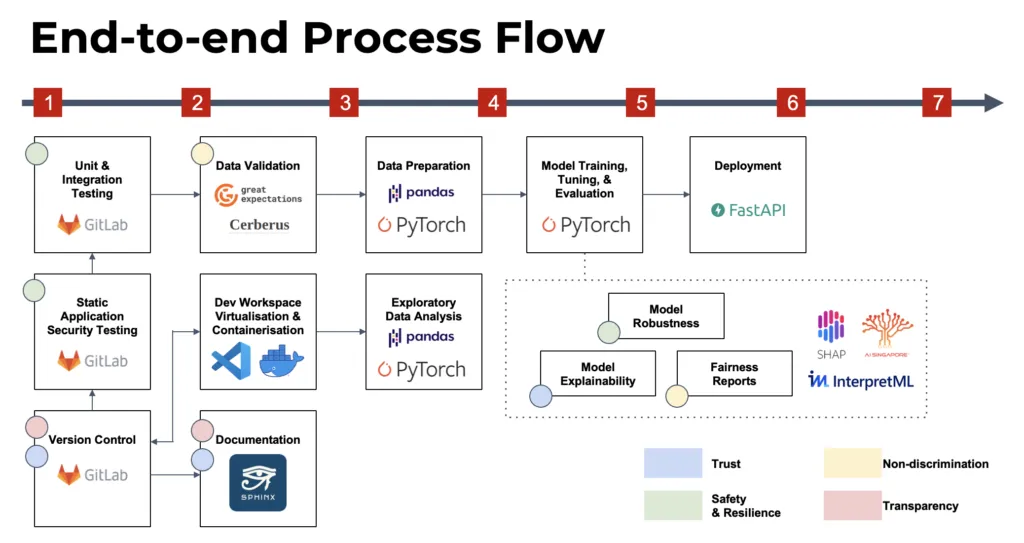
Through the deep skilling and project phases, AIAP develops well-rounded AI engineering skills. Apprentices learn the theory, tools and methods industry professionals actually use, and the team project experience ingrains software engineering rigour across the entire ML workflow.
The key engineering methods apprentices master include:
- Version control with Git and GitHub
- Testing and validation
- Clear documentation for maintainability
- Modular, reusable code organisation
- Proactive debugging techniques
- Automated deployment and infrastructure
- Consistent style compliance and code quality
- Effective collaboration and communication
The AIAP’s immersive structure provides end-to-end training in AI and proficiency in surrounding engineering disciplines. Apprentices graduate as skilled professionals grounded in proven software methodologies, ready to build, deploy and maintain real-world AI systems.
What the experience adds up to
The deep skilling phase grounds apprentices in both AI techniques and proven software engineering methods. Hands-on projects then reinforce a rigorous approach to building production-grade AI systems.
These are not hypothetical academic examples. Apprentices tackle business challenges that companies invest significant resources to solve. With guidance from experienced AI mentors, they work through the entire lifecycle of requirements gathering, data wrangling, model development and deployment. This end-to-end experience with real stakeholders accelerates learning beyond what any textbook or boot camp can provide. Apprentices learn by doing, absorbing lessons that stick with them into future careers.
Upon completing AIAP, graduates can join technology teams with proven abilities to engineer reliable AI. Intense immersion in real projects, guided mentorship and a focus on production readiness prepare apprentices for careers advancing AI for business and society.
No classroom, boot camp, or online training can deliver this.
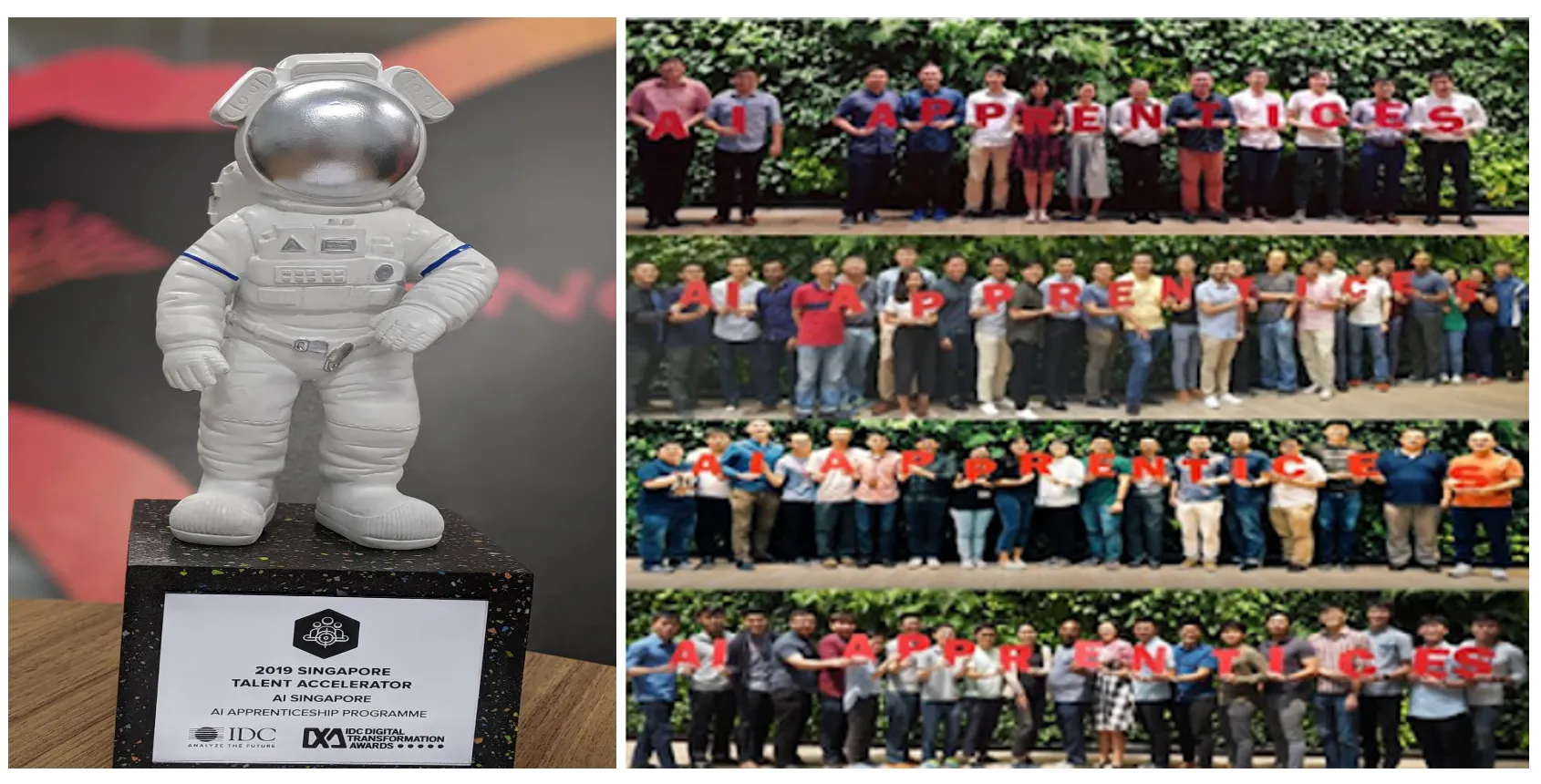
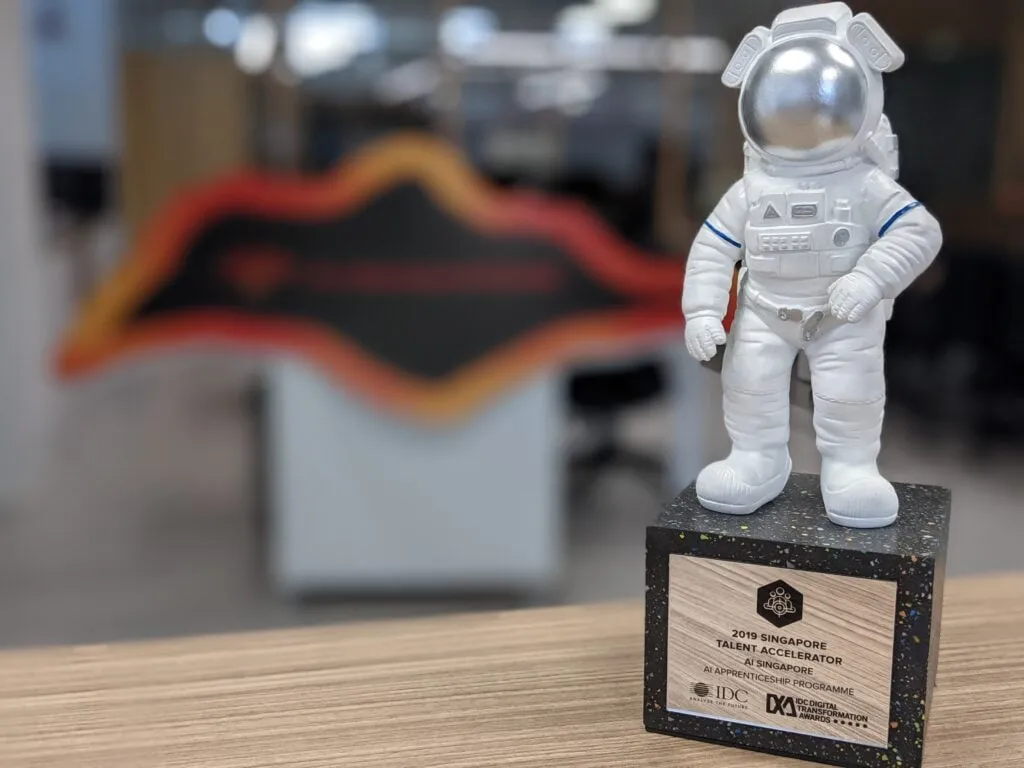 IDC Award 2019, Talent Accelerator award for AIAP
- careers
- technology